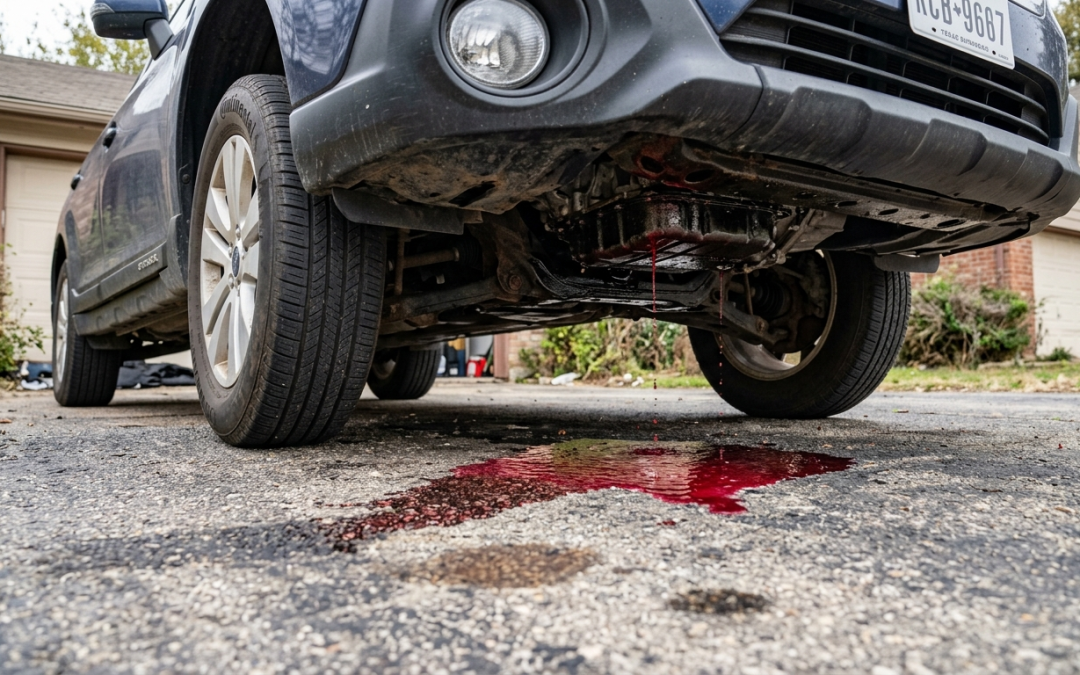
Discovering a puddle of mysterious fluid on your driveway or garage floor is an instant stomach-sinker for any car owner. While automobiles rely on several different fluids to keep running smoothly, a transmission fluid leak is one you should never ignore.
Your vehicle’s transmission is a complex mechanical system that relies heavily on hydraulic pressure, lubrication, and cooling provided entirely by transmission fluid. When that fluid drops below safe levels, it doesn’t take long for minor performance issues to escalate into severe, permanent internal damage.
If you spot a fresh puddle underneath your vehicle, don’t panic. Follow these essential steps to identify the problem, protect your vehicle, and figure out your next move.
Step 1: Confirm It’s Actually Transmission Fluid
Before you jump to conclusions, you need to play detective. Cars leak everything from harmless air conditioning condensation to dark engine oil. To identify transmission fluid, check for these three distinct characteristics:
-
The Color: Brand new automatic transmission fluid (ATF) is a bright, translucent pink or cherry red. As it ages and absorbs heat, it darkens to a light brown. If the puddle is dark brown or pitch black and smells burnt, your transmission is already running too hot.
-
The Consistency: It has a slick, oily texture—thicker than water but noticeably thinner and less greasy than heavy engine oil.
-
The Location: Look at where the puddle formed. Transmission fluid typically leaks near the front-middle or center of the vehicle, directly underneath the transmission pan or the front axle area.
Step 2: Check the Fluid Level (If Possible)
If your car uses a traditional transmission dipstick, you can check the fluid level yourself to see how severe the leak actually is.
-
Park on a completely level surface, engage the parking brake, and let the engine run until it reaches normal operating temperature.
-
Pull the transmission dipstick out, wipe it completely clean with a lint-free rag, insert it all the way back in, and pull it out again.
-
Look at the markings on the stick. If the fluid level falls below the “Warm” or “Add” line, your system is running low.
Important Note: Many modern vehicles now feature “sealed” transmissions that completely lack an under-hood dipstick. If your vehicle doesn’t have one, do not attempt to crawl under the car to check it—leave it to a professional technician with a vehicle lift.
Step 3: Assess the Severity and Drive Safely
How you handle the vehicle next depends entirely on the size of the leak and how the car is behaving:
If it’s a few tiny drops…
A slow, minor seep or a few small spots means you can safely drive the vehicle directly to a trusted repair shop. Keep a close eye on your dashboard for any warning lights, and listen carefully for any unusual noises.
If it’s a large puddle or an active drip…
Do not drive the vehicle. Running a transmission with critically low fluid will cause immediate, severe friction between the internal gears. This can burn out your clutch packs and torque converter in a matter of miles, turning a simple seal repair into a total transmission rebuild. If the leak is substantial, call a tow truck to bring it to a specialized shop.
Watch for warning signs!
If the leak is accompanied by any of these classic symptoms of low transmission fluid, pull over and turn off the engine immediately:
-
The transmission slips or hesitates when shifting gears.
-
The vehicle struggles or delays when shifting into Reverse or Drive.
-
You hear a distinct whining, buzzing, or clunking noise coming from under the floorboards.
-
You smell a distinct, acrid burning aroma inside the cabin.
Common Culprits: Why Is It Leaking?
Transmission leaks rarely fix themselves, and they generally stem from a few common wear-and-tear areas:
-
A Damaged Pan Gasket: The rubber or cork gasket sealing the oil pan to the bottom of the transmission can degrade, crack, or break over time.
-
Worn Axle or Driveshaft Seals: These rubber seals keep fluid inside the transmission where moving shafts exit the housing. They naturally wear out after years of spinning.
-
Leaking Cooler Lines: Metal or rubber lines carry fluid back and forth to your radiator to keep it cool. Road debris, rust, or loose connections can cause them to rupture.
Get an Accurate Diagnosis Today
Ignoring a transmission leak to “save money” is a gamble that almost always ends in a much bigger repair bill. Catching a leak early usually means a quick, affordable fix like replacing a worn gasket or tightening a cooling line.
Noticed a red spot on your driveway? Don’t leave your vehicle’s health to chance. Contact the specialists at Apache Transmission today to get an accurate diagnosis, fix the leak properly, and get back on the road with total confidence.
Recent Comments